
As a child of the Apollo program and a lifelong dreamer of spaceflight, I am thrilled to follow the Artemis 2 mission, carrying the first humans around the Moon (Luna) in over half a century, with the intent to pick up where we left off, establish a permanent lunar presence, and proceed to Mars and beyond.
This evening, the Artemis 2 crew of Reid Wiseman, Victor Glover, Kristina Koch, and Jeremy Hansen approaches the Moon’s gravitational sphere of influence, where lunar gravity exceeds terrestrial gravity. Kristina recently remarked, “Our strong hope is that this mission is the start of an era where everyone — every person on Earth — can look at the Moon and think of it as … a destination.” The dream is alive.
In Greek mythology, Artemis is the sister of Apollo; in reality, Artemis is safer (better computers), cheaper (as a fraction of US budget), and bigger (crew of 4 rather than 3) than Apollo. More importantly, with international and commercial help, I am hopeful that Artemis will evolve to a sustainable program so the Moon really does enter the human sphere as a destination, dramatically and irreversibly expanding the range of human experience.
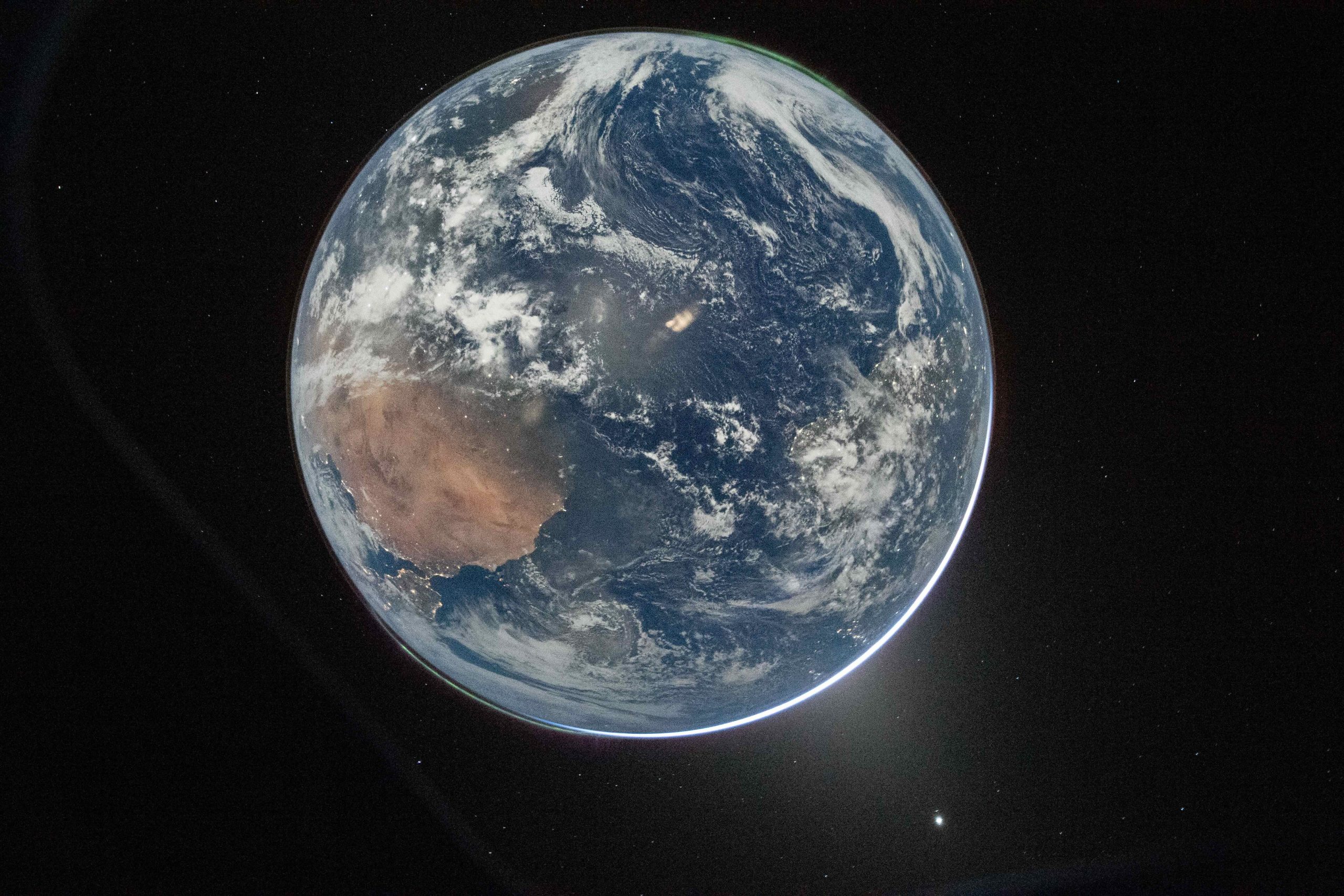
This Reid Wiseman Artemis 2 photo shows Earth illuminated by moonlight, except for a thin crescent illuminated by sunlight, with Venus in zodiacal light at 4 o’clock joined by aurora at 1 o’clock and 7 o’clock, shortly after translunar injection (TLI), 2026 April 2.
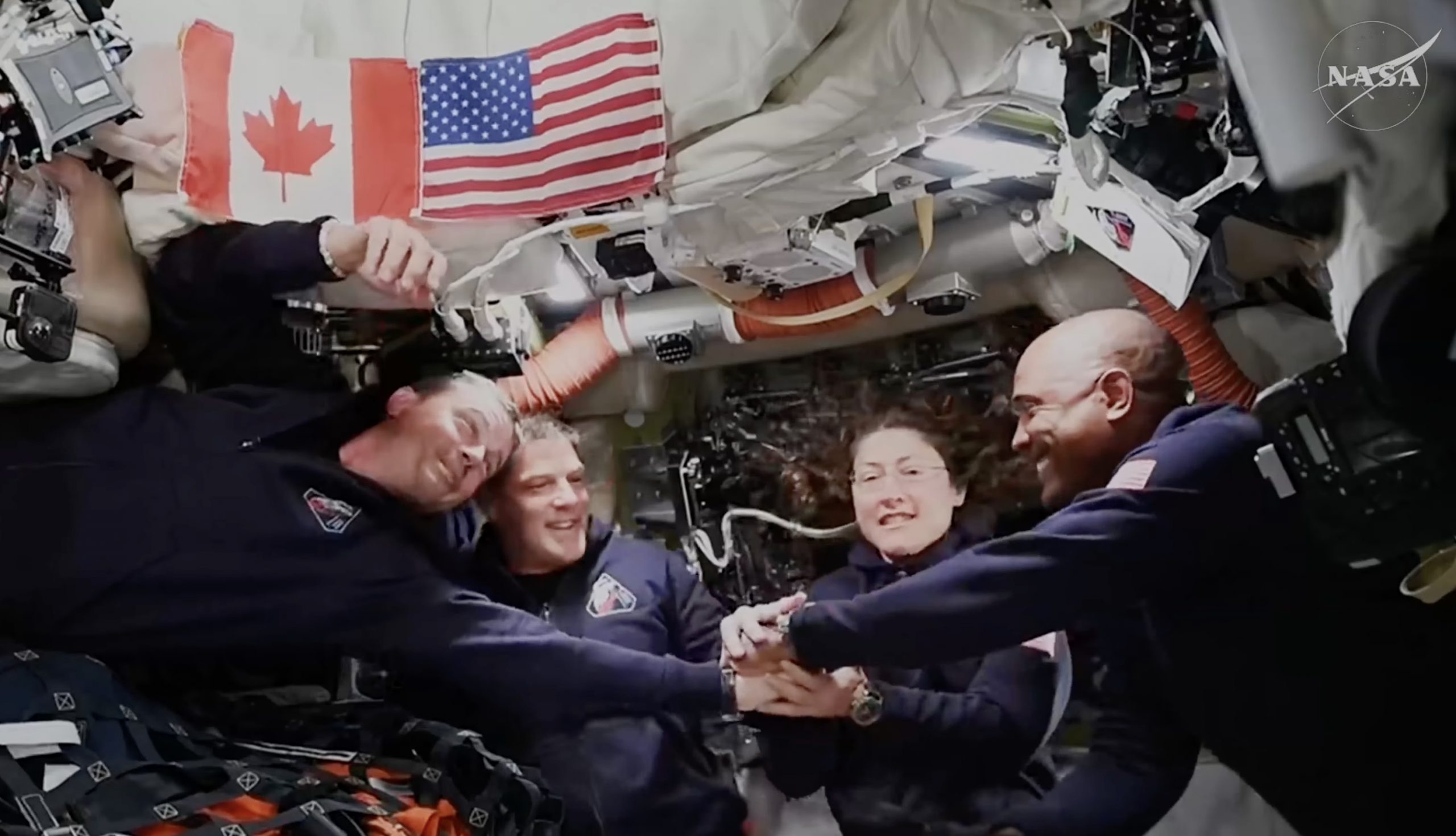
Artemis 2 crew — Reid, Jeremy, Kristina, Victor — in their Orion spacecraft “Integrity” en route to the Moon, 2026 April 4.
Thanks, Mark! I enjoy reading your posts as well.