
Known for thousands of years, hundreds of proofs of the Pythagorean theorem have been published, including one by U.S. President James Garfield. Here I animate three of my favorites. Each shows that the sum of the squares of the lengths of the legs of a right triangle equals the square of the length of its hypotenuse,
a^2+b^2=c^2.Without loss of generally, assume a \le b < c. You may need to click or tap the figures to trigger the animations.
Shuffle
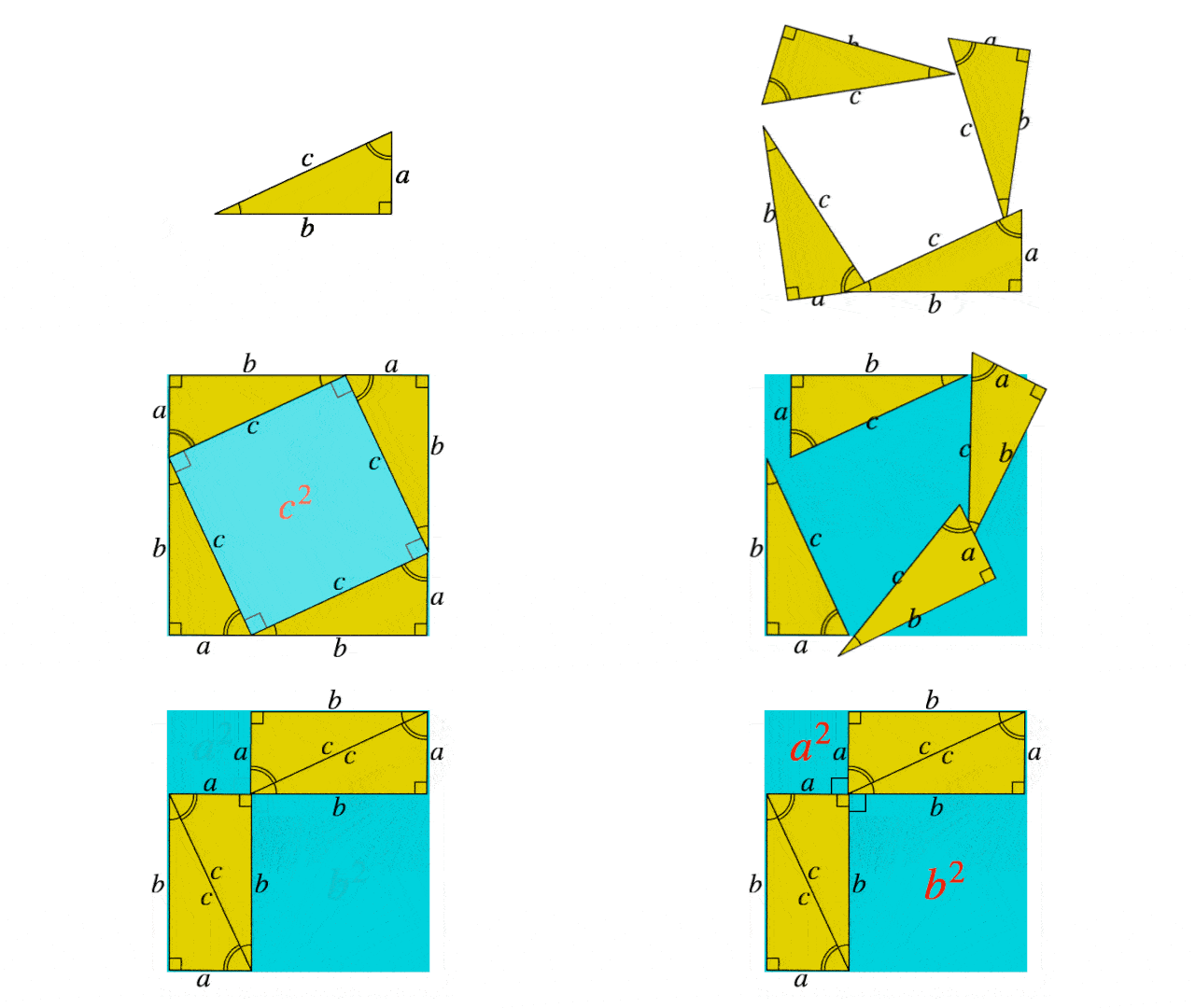
Quadruplicate the triangle, and arrange the copies along the edges of a square so they bound a rotated square of area c^2 (colored cyan in the animation below). Shuffle the triangles to form two rectangles that bound two smaller squares of size a^2 and b^2. Since shuffling does not change the exposed (cyan) area, a^2+b^2=c^2
Rescale
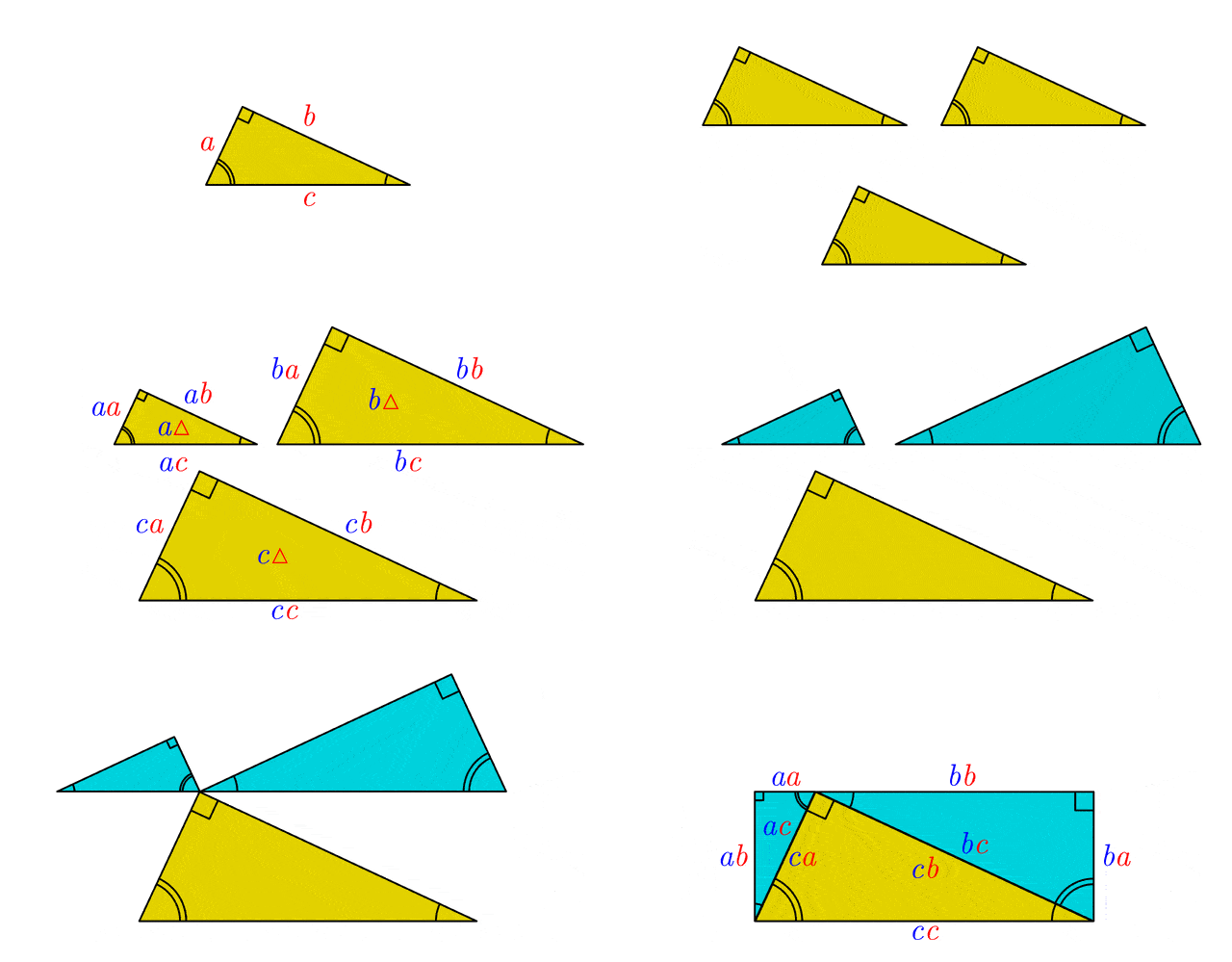
Triplicate the triangle, rescale one copy by the hypotenuse length c, a second by the leg length a, and a third by the leg length b. Flip the leg triangles and join all 3 copies to form a rectangle with opposite sides of length a^2+b^2=c^2.
Unfold
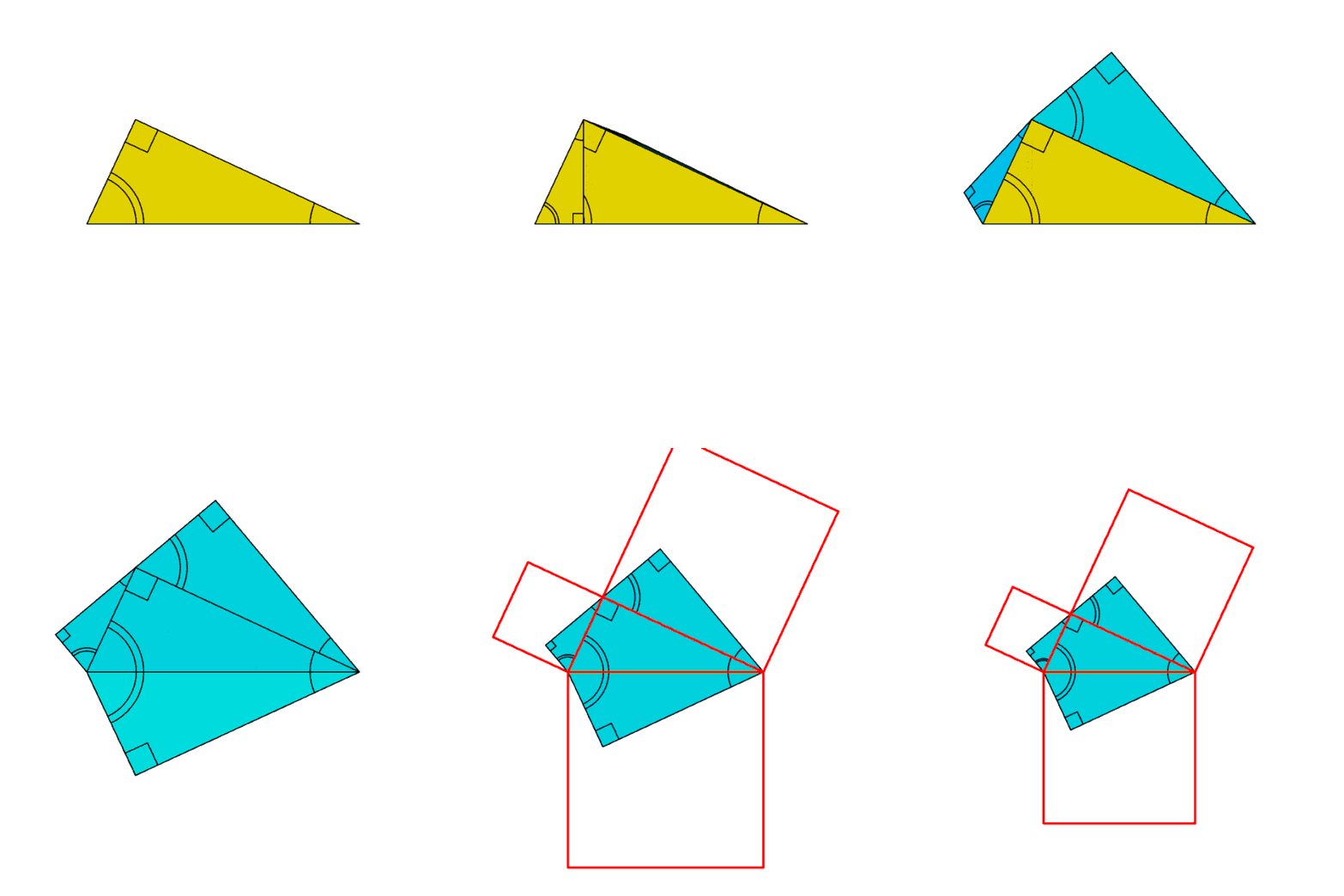
Guided by a perpendicular from the right angle to the hypotenuse, unfold the triangle so the original is surrounded by 3 similar triangles. The sum of the areas of the unfolded leg triangles equals the area of the unfolded hypotenuse triangle, and since the areas are proportional to the those of the corresponding squares, a^2+b^2=c^2.
Thanks, Mark! I enjoy reading your posts as well.